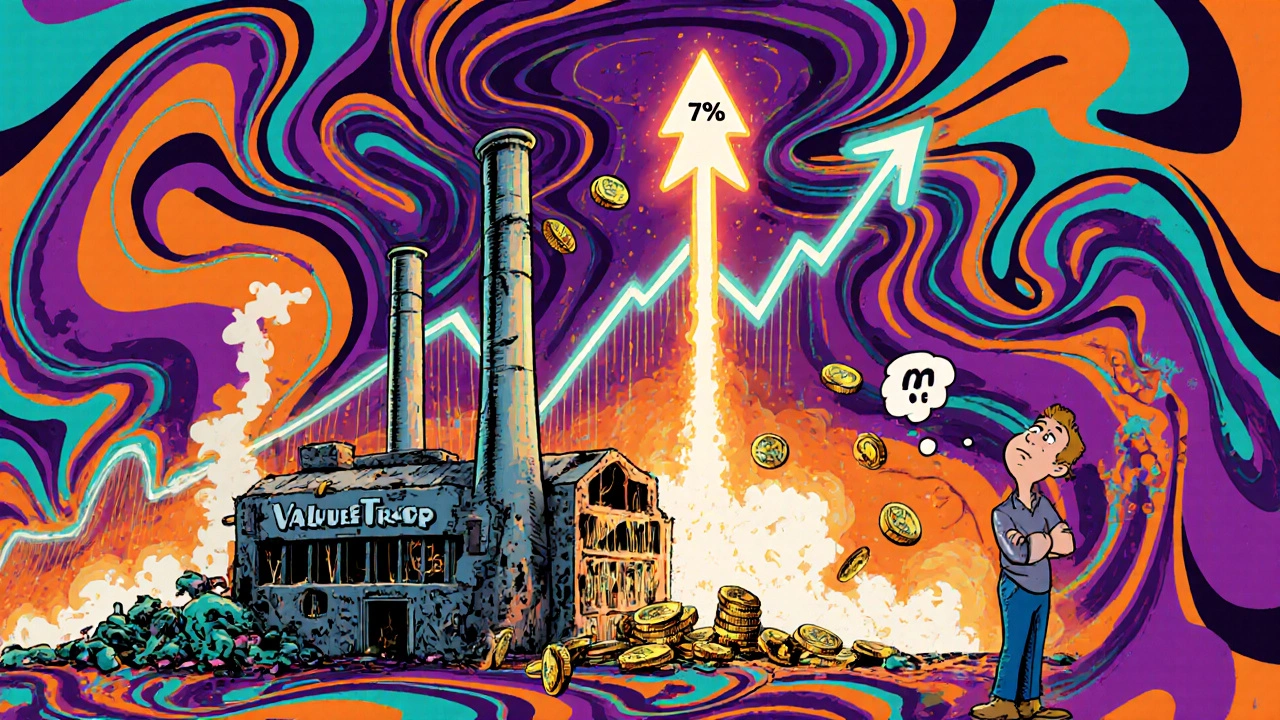
Value Traps: How to Spot and Avoid Investing in Falling Stocks
When a stock drops hard, it’s tempting to buy—especially if the company has a familiar name or used to be a market leader. But not all cheap stocks are bargains. Some are value traps, stocks that appear undervalued based on traditional metrics but are actually declining for deep, structural reasons. Also known as fallen angels, these investments lure you in with low P/E ratios and high dividend yields, then drain your capital over time. The problem isn’t the numbers—it’s the story behind them. A company might look cheap because its profits are shrinking, its customers are leaving, or its industry is being disrupted. If you don’t dig deeper, you’re not buying a bargain—you’re buying a sinking ship.
True value investing isn’t about buying low. It’s about buying right. That means checking if the company’s core business is still healthy. Does it still have a competitive edge? Is management honest and competent? Are earnings declining because of a temporary dip or because the product is obsolete? A stock fundamentals, the underlying financial and operational health of a company, including cash flow, debt levels, and revenue trends tell the real story. A company with $100 million in debt, falling sales, and a CEO who just sold half their shares isn’t a bargain—it’s a warning sign. Meanwhile, a company with strong cash flow, low debt, and consistent reinvestment in its business might be cheap for a good reason: the market hasn’t caught up yet.
Many investors get fooled because they focus on past performance. Just because a stock was once a winner doesn’t mean it will be again. Think of Blockbuster, Kodak, or Sears—once giants, now ghosts. What looks like a value play today could be the next cautionary tale. That’s why you need to look at undervalued stocks, companies trading below their intrinsic value due to temporary market panic or misperception with skepticism. Ask: Why is this stock cheap? Is it because the world changed, or because the market overreacted? The best value investors don’t just look at charts—they read annual reports, listen to earnings calls, and watch for signs of decay.
And don’t be fooled by dividends. A high yield can be a trap too. If a company is paying out more than it earns just to keep investors happy, it’s borrowing from the future. That dividend won’t last. The same goes for low P/E ratios—if earnings are falling faster than the price, the ratio will keep dropping, and you’ll keep losing money.
What you’ll find in the posts below aren’t generic tips. They’re real examples of value traps that cost people money, how to spot them before it’s too late, and what to look for instead. You’ll see how even smart investors get caught, how to use financial statements to uncover the truth, and why some of the most popular "bargains" are actually the riskiest bets of all. This isn’t about chasing cheap stocks. It’s about learning to see through the noise—and finding real value where others only see a bargain.