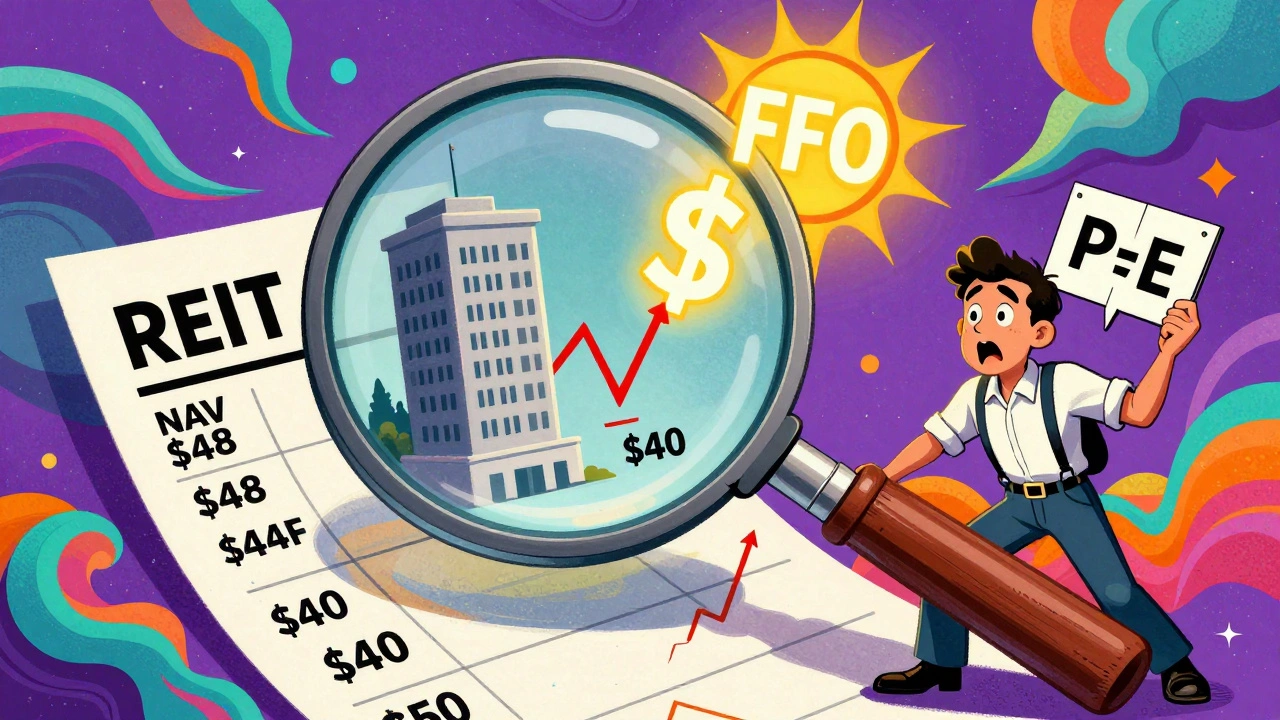
REIT Valuation: How to Assess Real Estate Investment Trusts for Better Returns
When you invest in a REIT, a Real Estate Investment Trust that owns and operates income-producing properties like apartments, offices, or warehouses. Also known as real estate investment trusts, they let you own pieces of commercial real estate without buying a building—making them one of the easiest ways to get exposure to property markets. But not all REITs are created equal. A high dividend yield might look tempting, but it could be a trap if the underlying property values are falling or if the company is taking on too much debt. REIT valuation isn’t just about the payout—it’s about understanding cash flow, asset quality, and how the market sees the future of those buildings.
What makes REITs different from stocks? They’re required by law to pay out at least 90% of their taxable income as dividends, which is why they often show higher yields than the S&P 500. But that same rule means they rarely reinvest profits into growth, so their value depends almost entirely on how well their properties perform. That’s where dividend yield, the annual dividend payment divided by the stock price becomes a starting point, not the whole story. You also need to look at property valuation, how much the buildings themselves are worth based on rent rolls, occupancy rates, and location. A REIT with 95% occupancy in high-demand markets like Austin or Atlanta is far more valuable than one with 70% occupancy in a shrinking town. And don’t ignore the balance sheet—high debt levels can crush returns when interest rates rise.
Many investors forget that REITs react to interest rates like bonds do. When the Fed hikes rates, borrowing gets expensive, and new property development slows. That can hurt REITs that rely on refinancing debt or expanding. But some REITs—like those in data centers or logistics warehouses—still grow because demand keeps rising. That’s why you can’t just compare yields. You need to ask: Is this REIT owning assets people still need? Are rents rising? Is the management team smart about leasing and maintenance? The best REITs don’t just pay dividends—they build value over time by keeping tenants happy and properties modern.
What you’ll find below are real, practical breakdowns of how REITs are priced, what metrics matter most, and how to avoid the common traps that eat into returns. From how to read a REIT’s funds from operations (FFO) statement to why some high-yield REITs are ticking time bombs, these posts give you the tools to judge them like a pro—not just a dividend hunter.