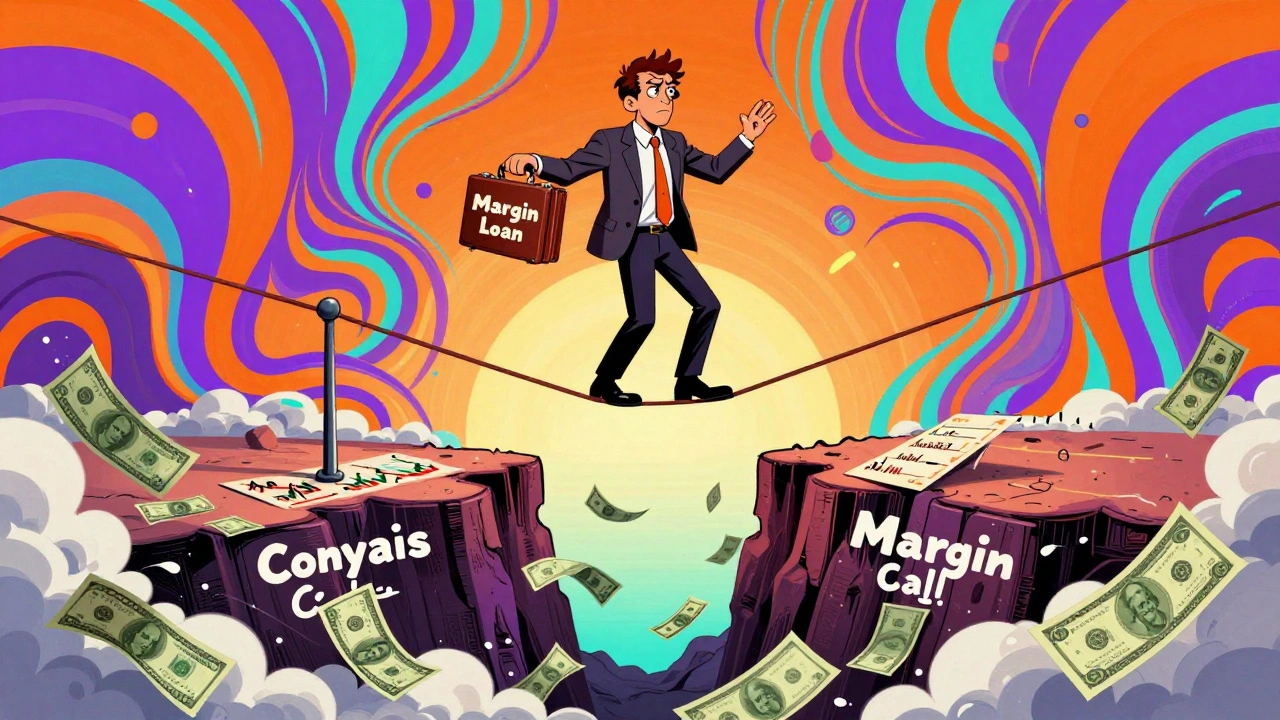
Margin Interest: What It Is, How It Works, and Why It Matters
When you borrow money from your broker to buy stocks, you’re using margin interest, the fee charged by brokerages for lending you cash to trade beyond your available balance. Also known as margin loan cost, it’s not a hidden charge—it’s a direct drag on your returns, and many investors don’t realize how much it eats into profits. If you’re buying $10,000 worth of stock but only have $5,000 in cash, the broker lends you the other $5,000—and charges you interest on that loan. That rate isn’t fixed. It changes based on the broker, market conditions, and how much you borrow.
Margin interest isn’t just about the rate. It’s tied to margin trading, the practice of using borrowed funds to increase your buying power, which can amplify both gains and losses. A 10% stock move becomes a 20% gain—or loss—when you’re trading on 50% margin. But if the market turns against you, you might get a margin call, forcing you to deposit more cash or sell assets fast. And while some investors use margin to buy more shares during dips, others use it to chase trends, which often ends badly. brokerage fees, including interest, commissions, and account maintenance charges, add up quietly. A 5% annual margin rate on $20,000 borrowed costs $1,000 a year. That’s $1,000 you didn’t earn, and it’s gone even if your investments break even.
Margin interest isn’t always bad. Some seasoned investors use it strategically—to fund a short-term opportunity, cover a tax bill without selling assets, or smooth cash flow during market downturns. But it’s rarely a good idea for beginners. The posts below show real cases: how one investor lost 40% of their portfolio because they ignored margin calls, how another used low-cost margin to buy a dividend stock and held through a crash, and why some brokerages charge 2x more than others for the same loan. You’ll also find clear comparisons of leveraged investing, using borrowed money to increase exposure to assets across platforms, and how investment costs, including interest, fees, and hidden charges quietly eat into long-term returns. Whether you’re thinking about using margin or just want to understand why your account balance isn’t growing as fast as the market, these guides cut through the noise. No fluff. Just what you need to know before you borrow.