
Trust Type Calculator: Revocable vs Irrevocable
Which Trust Type Is Right For You?
Answer these questions to see which trust type best matches your financial goals and estate planning needs. This calculator considers key factors like asset protection, estate tax benefits, and control flexibility.
Recommended Trust Type
When you think of investing, you probably imagine stocks, mutual funds, or real estate. But what if those investments aren’t just yours? What if they’re meant for your kids, a charity, or someone who can’t manage money themselves? That’s where a trust account comes in. It’s not just a bank account-it’s a legal tool that holds and grows assets for someone else, under strict rules. And if you’re planning for the long term, protecting wealth, or avoiding probate, this is one of the most powerful tools you can use.
What Exactly Is a Trust Account for Investments?
A trust account is a legal arrangement where you (the grantor) give control of your assets to a trustee, who manages them for the benefit of one or more beneficiaries. This isn’t a personal savings account. It’s a separate legal entity with its own rules, tax ID, and reporting requirements. The trustee doesn’t own the money-they’re legally bound to use it only for the beneficiaries’ benefit.
Trusts have been around for centuries, but today they’re governed by the Uniform Trust Code, adopted in 34 U.S. states as of 2023. That means if you’re setting one up in most places, you’re following a standardized framework that protects everyone involved. The main goals? To grow investments safely, reduce estate taxes, avoid probate, and make sure your money goes exactly where you want it-even after you’re gone.
What can you hold in a trust? Pretty much anything that has value: cash, stocks, bonds, mutual funds, rental properties, business shares, even artwork or heirlooms. The key is that the trustee must manage these assets with care, making decisions based on the beneficiaries’ needs, not their own. Vanguard, U.S. Bank, and Morgan Stanley all offer trust services because they know how critical professional management is here.
Revocable vs Irrevocable: Which One Fits Your Goals?
There are two main types of investment trusts-and the difference changes everything.
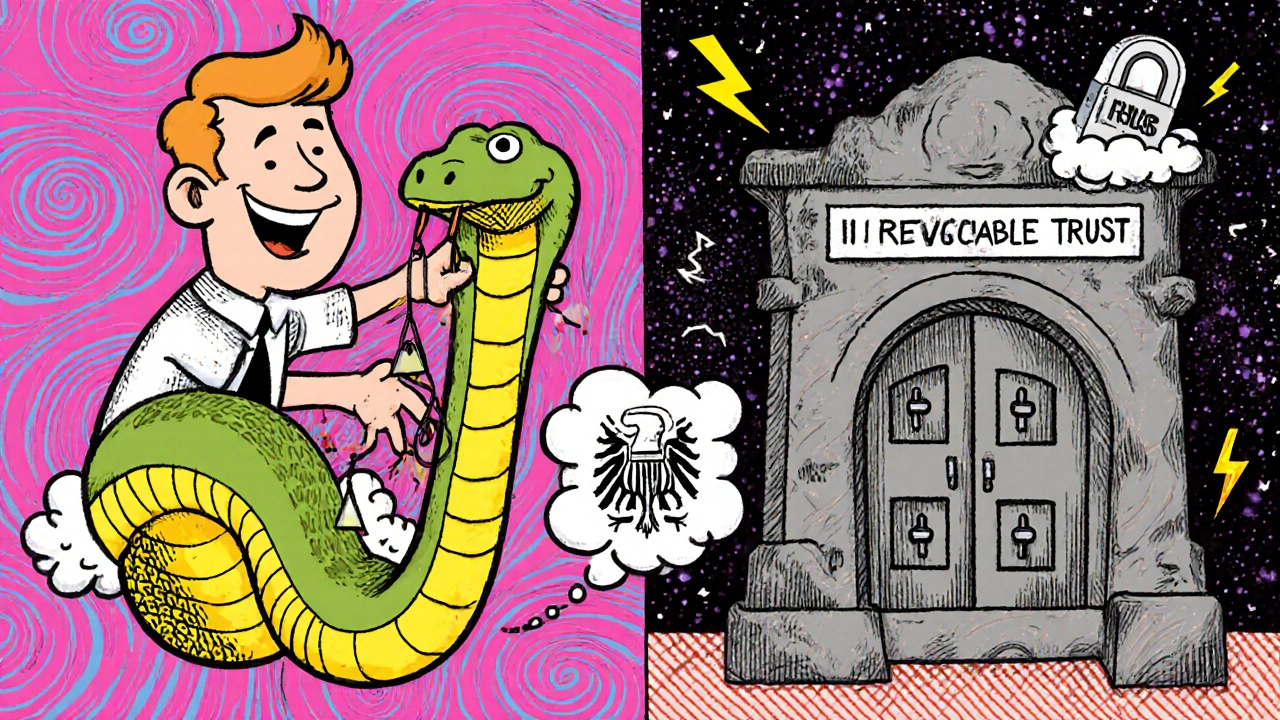
Revocable trusts let you stay in control. You can change the terms, add or remove beneficiaries, or even cancel the trust entirely. That’s great if you want flexibility. But because you still have control, the IRS treats the assets as part of your estate. That means they’re still subject to estate taxes, and creditors can go after them if you owe money.
Irrevocable trusts are the opposite. Once you set them up, you can’t change them easily. You give up ownership. That sounds scary-but it’s exactly why they’re powerful. Assets in an irrevocable trust are protected from creditors, lawsuits, and estate taxes. They’re also shielded if a beneficiary goes through divorce or bankruptcy. The trade-off? You lose access. If you need that money back, you can’t just take it out.
Most people start with a revocable trust because it’s easier. But if your goal is asset protection or minimizing taxes for large estates, an irrevocable trust often makes more sense. Some even use both: a revocable trust for day-to-day control, and an irrevocable one to lock in tax savings.
How to Set Up a Trust Account: Step-by-Step
Setting up a trust isn’t like opening a checking account. It’s a legal process with paperwork, deadlines, and rules you can’t ignore.
- Choose your trustee. This is the most important decision. It could be a family member, a friend, or a professional fiduciary (like a bank or trust company). The trustee must be trustworthy, organized, and willing to handle the work. If you pick someone inexperienced, you’re setting them up to fail.
- Identify your beneficiaries. Who gets the money? Be specific. “My children” isn’t enough. List names, birthdates, and what happens if someone dies before you. Include contingencies.
- Write the trust document. This is the legal contract that spells out everything: who’s in charge, how money is invested, when distributions happen, and what happens if the trustee can’t serve. Don’t use an online template. Most are outdated or don’t match your state’s laws. Hire an attorney. MetLife and Wiles Law Firm both say this is the easiest way to avoid costly mistakes.
- Get an EIN from the IRS. Every trust needs its own tax ID number. You can apply online for free at the IRS website. Without this, you can’t open a trust bank account or file tax returns.
- Sign and notarize. Most states require the document to be signed in front of a notary. Some also require two witnesses. Check your state’s rules-California, for example, has strict requirements under Business and Professions Code Section 10145.
- Fund the trust. This means transferring assets into the trust’s name. Open a new bank or brokerage account in the trust’s name (e.g., “The John Doe Family Trust”). Don’t mix it with your personal accounts. Banks will ask for a copy of the trust document to verify the trustee’s authority. U.S. Bank and Vanguard both require this step before allowing any deposits.
Timing matters. In California, brokers must deposit trust funds into a trust account within three business days of receiving them. Delays can trigger penalties. Don’t wait.
Managing the Trust: Rules You Can’t Break
Once the trust is funded, the real work begins. The trustee isn’t just a custodian-they’re a fiduciary. That means they have a legal duty to act in the beneficiaries’ best interest, with the highest level of honesty and care.
Here’s what that looks like in practice:
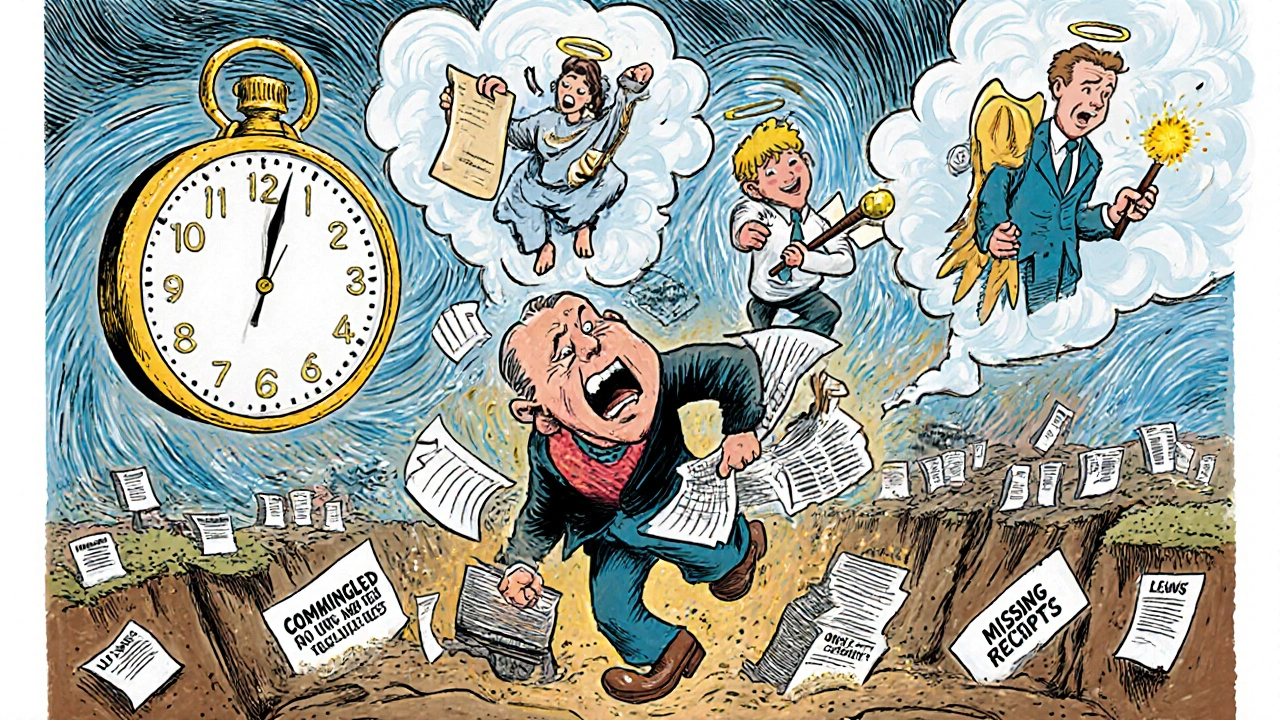
- Keep everything separate. Trust funds must never mix with personal money. Even one commingled transaction can destroy the trust’s legal protection.
- Track every penny. The California Department of Real Estate requires six specific record-keeping practices. That includes: recording every deposit and withdrawal, noting the date, amount, reason, and supporting documents (receipts, invoices, contracts), and maintaining separate ledgers for each beneficiary.
- Reconcile monthly. Every month, the trustee must compare the bank statement to their internal records. If there’s a mismatch, they must find and fix it immediately. Financial Cents calls this “the heart of trust accounting.”
- Invest wisely. The trustee must follow the “prudent investor rule”-meaning investments should be diversified, low-risk, and aligned with the beneficiaries’ goals. A 70-year-old beneficiary needs different investments than a 10-year-old.
- Pay taxes on time. Trusts file their own tax returns (Form 1041). Income earned by the trust is taxed at higher rates than individuals. The trustee must pay any taxes due before making distributions. Morgan Stanley’s guide stresses this: “Abide by all applicable tax laws.”
Miss one of these steps, and you risk liability. Beneficiaries can sue. The IRS can penalize. The trust can be invalidated.
Where to Open a Trust Account
Not all banks handle trusts the same way. Here’s how the big players differ:
| Institution | Focus | Best For | Key Feature |
|---|---|---|---|
| Vanguard | Investment management | Investors who want low-cost ETFs and mutual funds | Automated portfolio rebalancing, low fees, integrated financial planning |
| U.S. Bank | Estate planning integration | Families needing comprehensive estate and tax planning | 5-step grantor process, trust administration support, legal referrals |
| Morgan Stanley | Fiduciary support | Trustees who want help but not control | Agency services: advice without management, tax guidance, compliance tools |
| Local credit unions | Basic trust accounts | Simple trusts with small balances | Lower fees, personal service, but limited investment options |
Don’t just pick the biggest name. Look at what you need. If you’re managing a $500,000 portfolio of stocks and bonds, Vanguard’s tools make sense. If you’re handling a family home and rental properties, U.S. Bank’s estate planning team might be more helpful.
Common Pitfalls and How to Avoid Them
Most trust problems come from simple mistakes:
- Not funding the trust. Many people sign the paperwork but never move assets into it. That makes the trust useless. If your house isn’t titled in the trust’s name, it still goes through probate.
- Using the wrong account. Opening a “joint account” or “payable-on-death” account instead of a real trust. These don’t offer the same control, tax benefits, or protection.
- Ignoring state laws. South Carolina requires trustees to notify beneficiaries of their rights. California requires specific record formats. Ignoring these can void your trust.
- Waiting too long to update. If a beneficiary dies, gets married, or has a disability, your trust may need changes. Revocable trusts can be updated. Irrevocable ones often can’t-so get it right the first time.
- Not keeping receipts. One missing invoice can turn a routine distribution into an audit red flag.
HopkinsCPA’s advice is simple: “When in doubt, consult a financial planner or attorney.” Trusts aren’t DIY projects.
Why This Matters Now
Over the next 20 years, an estimated $84.4 trillion in assets will pass from baby boomers to younger generations. That’s more than the entire U.S. GDP. Most of it will go through trusts. Why? Because people are smarter now. They know probate takes years. They know taxes eat away at wealth. They know how easy it is for a child to lose money if they inherit too soon.
Trust accounts aren’t just for the ultra-rich. If you own a home, have investments, or care about what happens to your money after you’re gone, you need to understand them. A properly set up and managed trust can protect your legacy, reduce stress for your family, and ensure your values live on through your investments.
The system works-but only if you follow the rules. Don’t cut corners. Don’t assume your cousin can handle it. Don’t skip the EIN. Don’t ignore the monthly reconciliation. This isn’t optional. It’s the law.
Can I be my own trustee?
Yes, you can be your own trustee in a revocable trust. You control the assets while you’re alive and well. But if you become incapacitated or die, you must name a successor trustee to take over. You can’t be your own trustee in an irrevocable trust because you must give up control for it to offer asset protection and tax benefits.
Do trust accounts earn interest?
Yes, and they should. Trust accounts are typically held in interest-bearing accounts like money market funds or CDs. The interest earned belongs to the trust and must be reinvested or distributed according to the trust terms. The trustee can’t pocket it. Banks are required to show trust account interest separately on statements.
Are trust accounts FDIC insured?
Yes, but the coverage is per beneficiary, not per account. If a trust has three beneficiaries and the account is held at an FDIC-insured bank, each beneficiary is insured up to $250,000. That means a trust with three beneficiaries could have up to $750,000 insured. This only applies if the trust meets specific federal requirements and the bank properly labels the account.
How often do I need to update a trust?
Review your trust every 3-5 years, or after major life events: birth, death, divorce, marriage, relocation to another state, or a significant change in assets. If you move to a new state, your trust may need to be rewritten to comply with local laws. California and Texas, for example, have very different trust rules.
Can I use a trust to avoid paying taxes?
No. Trusts don’t eliminate taxes-they can reduce them. Irrevocable trusts can remove assets from your taxable estate, lowering estate taxes. But income earned by the trust is still taxed, often at higher rates than individuals. The goal isn’t to dodge taxes, but to manage them legally and efficiently. Always work with a tax professional.
What happens if the trustee mismanages the trust?
Beneficiaries can sue the trustee for breach of fiduciary duty. Courts can remove the trustee, force them to repay losses, and even impose penalties. That’s why record-keeping is so critical. If the trustee can prove they followed all rules-monthly reconciliations, proper documentation, diversified investments-they’re protected. If they can’t, they’re liable.
Can a trust hold cryptocurrency?
Yes, but it’s complex. Most banks and traditional brokers won’t hold crypto. You’ll need a specialized custodian or a digital wallet controlled by the trustee. The trust document must clearly define how crypto is stored, accessed, and transferred. Without proper planning, crypto can be lost forever if the trustee doesn’t know the private keys or dies without passing them on.
Julia Czinna
October 30, 2025 AT 16:07So many people think trusts are only for the rich, but honestly? If you own a home or have any investments, this is non-negotiable. I set one up for my mom after my dad passed, and the peace of mind was worth every dollar spent on the attorney. The record-keeping part is tedious, but if you don’t do it, you’re just asking for trouble later. Monthly reconciliations? Non-negotiable. One missed entry can turn into a legal nightmare.
Also, don’t underestimate the importance of naming a successor trustee. My cousin was supposed to take over, but he had no idea what he was doing. We ended up hiring a professional fiduciary - expensive, but necessary. Trusts aren’t DIY projects, no matter how many YouTube videos tell you otherwise.
Laura W
October 30, 2025 AT 22:16YUP. Just had to explain this to my aunt who thought a POD account was ‘the same thing.’ Nope. A trust is a whole different beast. If you’re not funding it, it’s just a fancy piece of paper. I’ve seen so many families blow it because the house wasn’t retitled, or the brokerage account was still in the decedent’s name. Probate is a nightmare - 18 months, legal fees eating half the estate, cousins fighting over a 1998 Honda.
And crypto in a trust? Bro. That’s a whole other level of chaos. If the trustee doesn’t have the seed phrase and dies? Poof. Gone. Like, forever. No one’s gonna recover it. You need a secure, legally documented key management plan. No ‘I’ll tell my kid later’ nonsense. Write it down. Lock it. Give copies to two people. Period.
RAHUL KUSHWAHA
November 1, 2025 AT 20:20