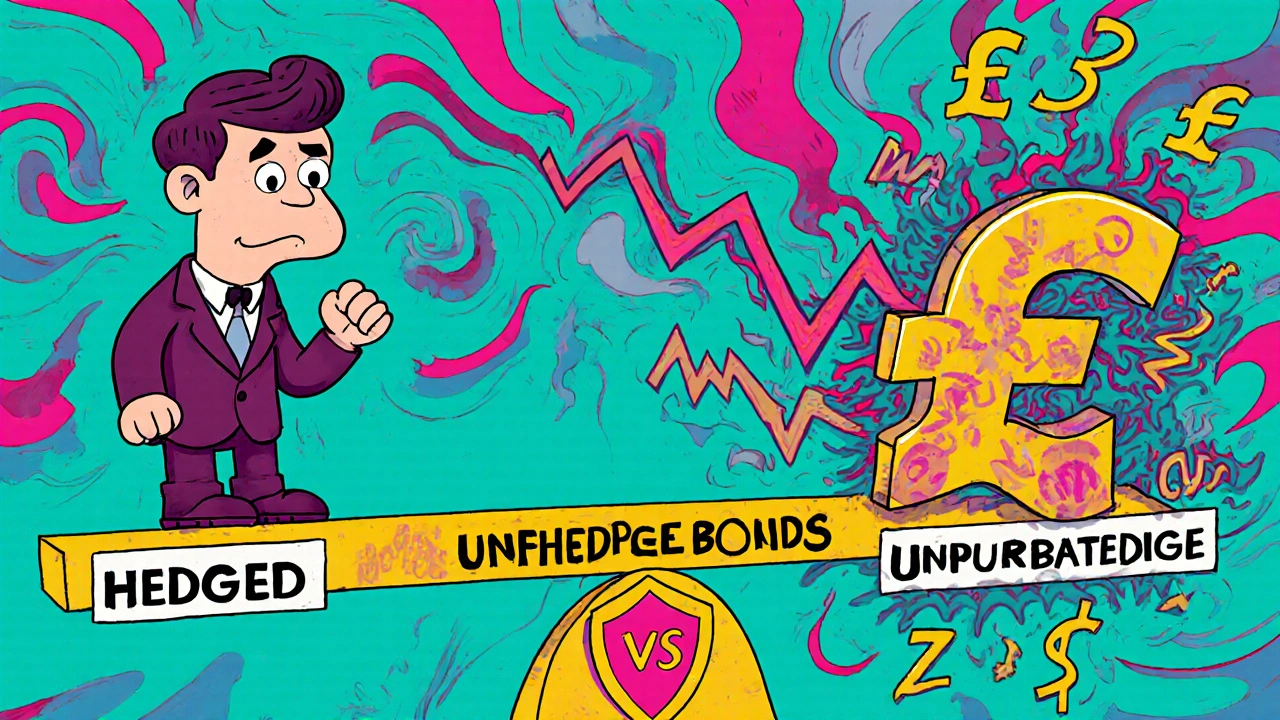
Unhedged Bond Funds: What They Are, Why They Matter, and How They Affect Your Portfolio
When you invest in a unhedged bond fund, a type of bond fund that doesn’t protect against changes in foreign currency values. Also known as currency-unhedged bond funds, it lets the value of the bonds you own float with exchange rates—meaning your returns can be boosted or wiped out by movements in the dollar versus the euro, yen, or peso. This isn’t just a technical detail—it’s a major factor in how much money you actually make—or lose.
Most people think bond funds are safe because they’re bonds. But if those bonds are issued in another country, like Germany or Japan, and the fund doesn’t hedge the currency, then you’re not just betting on interest rates—you’re also betting on whether the euro will rise or fall against the dollar. A strong dollar can eat up all your bond gains. A weak dollar? You could see your returns jump by 10% or more overnight. This is why currency risk, the chance that exchange rate changes will hurt your investment returns matters as much as credit risk or duration. And it’s why some investors choose hedged bond funds, funds that use financial tools to cancel out currency swings—while others actively pick unhedged ones to bet on currency trends.
Unhedged bond funds are common in international bond ETFs and mutual funds, especially those tracking emerging markets. If you’re buying a fund that holds Brazilian government bonds or Indian corporate debt, chances are it’s unhedged. Why? Because hedging costs money, and many fund managers assume long-term investors can ride out short-term currency swings. But if you’re planning to use this money in five years—not twenty—those swings could cost you. It’s also why these funds often show bigger ups and downs than U.S. bond funds. You’re not just reacting to Fed rate changes; you’re reacting to political shifts in Mexico, inflation in Turkey, or central bank moves in Australia.
There’s no one-size-fits-all answer. If you believe the dollar will weaken over the next few years, an unhedged bond fund could be your best bet. If you’re just trying to diversify without extra risk, a hedged version might be smarter. The key is knowing which one you’re holding—and why. Most investors don’t check. They just click "buy" because the fund name says "Global Bonds" and the yield looks good. That’s how people get surprised.
What you’ll find below are real, practical breakdowns of how these funds behave, which ones carry hidden currency risks, how to spot them in your portfolio, and when they actually help you outperform. No jargon. No fluff. Just what you need to know to decide if unhedged bond funds belong in your money plan—or if you’re better off elsewhere.