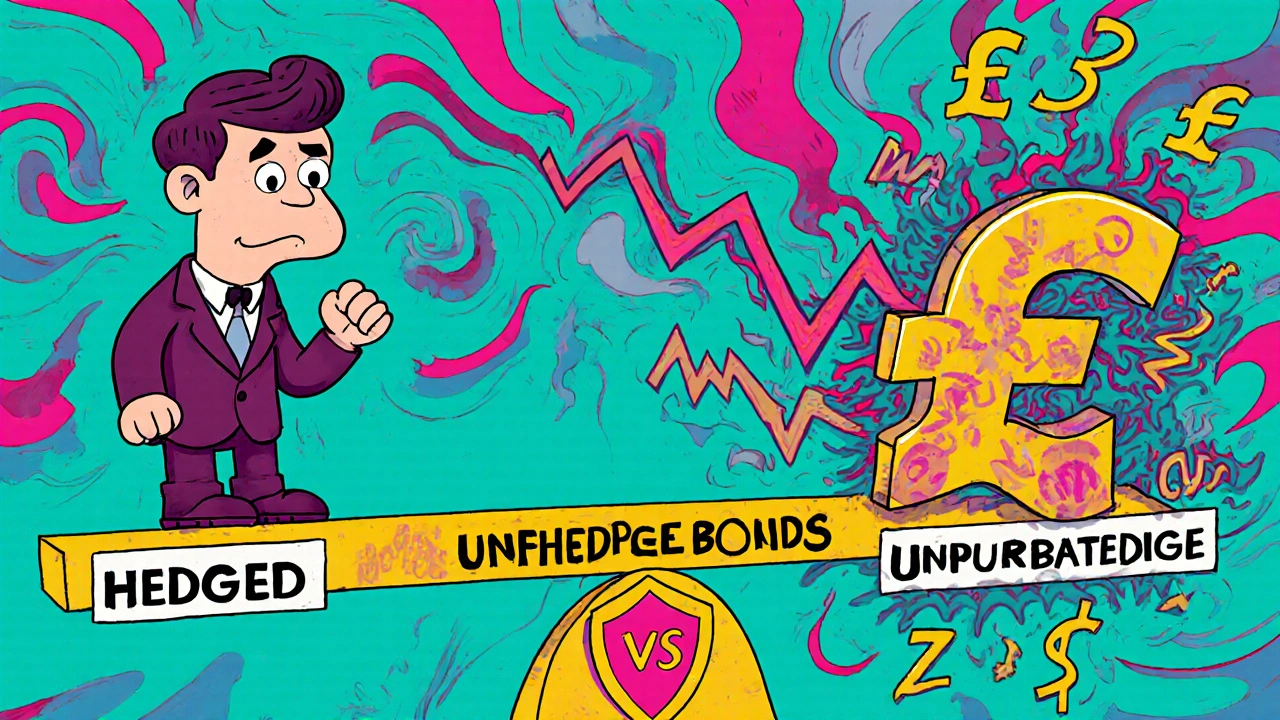
Currency Risk: How Exchange Rates Impact Your Investments
When you invest in assets outside your home country, you’re not just betting on the company or market—you’re also betting on the currency risk, the chance that changes in exchange rates will reduce the value of your foreign investments when converted back to your home currency. This isn’t just a footnote for global investors. It’s a real, measurable force that can turn a winning stock into a losing one—no matter how good the company is. If you own a German stock and the euro drops against the dollar, your gains vanish even if the stock price stays flat. It’s like buying something on sale, only to find the discount disappeared when you got home.
That’s why foreign investments, assets denominated in currencies other than your own, such as international stocks, bonds, or ETFs come with a hidden cost. You can’t ignore it. The exchange rate risk, the volatility in how one currency trades against another, often moves faster and harder than the underlying asset. A 10% rise in a Japanese stock means nothing if the yen falls 15%. This isn’t theory—it’s why many investors who bought into emerging markets in 2022 saw their portfolios shrink even as local markets climbed. And it’s why smart investors look at hedging currency risk, using financial tools like currency forwards or ETFs that neutralize exchange rate moves to protect their returns.
There’s no one-size-fits-all fix. Some investors ignore currency risk entirely, betting that over time, fluctuations even out. Others hedge everything, paying fees to lock in rates. A few use currency movements to their advantage, buying when a foreign currency is weak and selling when it’s strong. The key is knowing what you’re exposed to. If you’re holding an ETF that tracks European companies, you’re already taking on currency risk unless it’s marked as currency-hedged. If you’re buying bonds in Brazil, you’re not just earning interest—you’re gambling on the real’s value against the dollar. And if you’re using a robo-advisor that automatically allocates to global assets, check whether it accounts for this.
What you’ll find below are real, practical guides from investors who’ve been burned by currency swings—and those who learned how to use them. You’ll see how money market funds can offer a temporary shield, how diversifying across time horizons helps smooth out volatility, and why some international ETFs are safer than others. These aren’t abstract ideas. They’re tools used by real people managing real money in a world where a single exchange rate shift can wipe out months of gains.