Identity Protection Score Calculator
How Secure Is Your Financial Identity?
Assess your current identity protection status with this free calculator. Based on your answers, you'll receive a personalized security score and actionable recommendations to reduce your risk of identity theft.
Every year, over 15 million Americans have their financial identity stolen. Not just their name or address-real, actionable access to their bank accounts, credit cards, tax refunds, and even Social Security numbers. And it’s getting smarter. Criminals aren’t just digging through your trash anymore. They’re using AI to mimic your voice, cracking weak passwords, and buying your stolen data on dark web marketplaces. If you haven’t taken serious steps to protect your financial identity, you’re one phishing email or unsecured Wi-Fi connection away from disaster.
How Identity Theft Actually Happens Today
Most people think identity theft means someone steals your wallet. That’s old school. In 2025, 68% of cases start with credential stuffing-automated bots trying thousands of leaked passwords from past data breaches on your bank login page. If you reuse the same password across sites, you’re giving them the key to your finances. It doesn’t stop there. Fake financial apps on Android are exploding. Over 32,000 malicious banking apps were detected in Q2 2025 alone. These look exactly like your bank’s app. You enter your login, and boom-your credentials are sent to a criminal in another country. Even worse, AI voice clones are now impersonating family members over the phone. One victim in Ohio lost $28,000 after her "daughter" called, sounding exactly like her, begging for help with an emergency. Then there’s the dark web. Your Social Security number, credit card details, and even your mother’s maiden name are being sold in bulk. Services like LifeLock and IdentityForce scan over 600,000 illicit forums daily. In Q1 2025, they detected exposed data in an average of 47 hours after a breach. That’s fast-but only if you’re signed up.The Only 3 Things You Must Do Right Now (Free)
You don’t need to spend a dime to drastically reduce your risk. Here’s what actually works:- Place a credit freeze at all three bureaus. This locks your credit file so no one can open new accounts in your name. It’s free, legal, and required by federal law since 2018. You can do it online in 15 minutes per bureau-Experian, Equifax, and TransUnion. Don’t wait. A credit freeze blocks 99% of new account fraud.
- Switch to authenticator apps for multi-factor authentication (MFA). Stop using SMS codes. They’re easy to hijack with SIM-swapping attacks. Use Google Authenticator or Microsoft Authenticator instead. CalPERS’ cybersecurity team says MFA with authenticator apps reduces account compromise by 99.9%. Enable it on every financial account-bank, credit card, PayPal, even your investment apps.
- Shred everything with account numbers. The USPS Office of Inspector General found 37% of Social Security number theft still happens through unsecured mailboxes. A simple paper shredder costs $30. Use it for bank statements, medical bills, and pre-approved credit offers.
These three steps alone will stop 8 out of 10 identity theft attempts. No app, no subscription, no hassle.
Passwords Are Still Your First Line of Defense
NIST, the federal agency that sets cybersecurity standards, says passwords should be at least 12 characters long and include uppercase, lowercase, numbers, and symbols. That’s it. No "Password123!" nonsense. And absolutely no reusing passwords across accounts. Most people still use the same password for their bank, email, and Netflix. That’s like using the same key for your house, car, and safe. One breach, and you’re wide open. Use a password manager. Bitwarden (free) or 1Password (paid) generates and stores unique, strong passwords for every account. You only need to remember one master password. Security.org found users who set up a password manager cut their recovery time by 75% after a breach. Setup takes about two hours. Worth every minute.
Free vs. Paid Identity Protection: What’s Actually Worth It?
Free services like Credit Karma give you credit score updates and basic alerts. That’s it. They don’t scan the dark web. They don’t help you recover stolen funds. They don’t even notify you if your SSN is for sale. Paid services like IdentityForce ($29.99/month) or Aura ($12/month) offer real value:- Dark web monitoring that alerts you within hours if your data appears
- $1 million identity theft insurance
- 24/7 U.S.-based fraud resolution specialists who handle calls with banks and creditors for you
- Reimbursement for lost wages and legal fees
Reddit user u/FinancialSafety2025 reported LifeLock recovered $42,000 in fraudulent charges within 72 hours after his identity was stolen. That’s the kind of service that pays for itself.
But here’s the catch: 63% of negative reviews on Trustpilot complain about false alerts. IdentityForce users get an average of 8.2 unnecessary warnings per month. That’s annoying-but not dangerous. Better to be paranoid than broke.
For people with less than $50,000 in assets, an introductory plan like Aura makes sense. If you have over $1 million, go for Executive Protection plans ($99+/month) that include legal concierge services. For businesses, CrowdStrike Falcon Identity Protection ($5.50/user/month) detects suspicious logins using AI behavior analysis. It’s not cheap, but it’s the only thing that stops insider threats.
The Hidden Threat No One Talks About: Deepfakes
AI voice cloning is the new frontier of fraud. OpenEDR’s 2025 report documented 12,400 verified cases where criminals used AI to mimic a family member’s voice to trick people into wiring money or giving up PINs. That’s a 300% jump from last year. No app can stop this. No freeze blocks it. No password helps. The only defense? Verify. If your "son" calls and says he’s in jail and needs $5,000, don’t act. Call him back on a number you know is real. Ask a personal question only he’d know. If your bank calls saying your account is compromised, hang up and call the number on your card. Never trust a number they give you on the call. This isn’t sci-fi. It’s happening now. Pindrop Security found 1 in every 200 bank calls in September 2025 involved a deepfake. If you’re over 50, you’re a target. But younger people aren’t safe either. TikTok videos showing identity theft recovery have hit 4.2 billion views-because it’s terrifyingly common.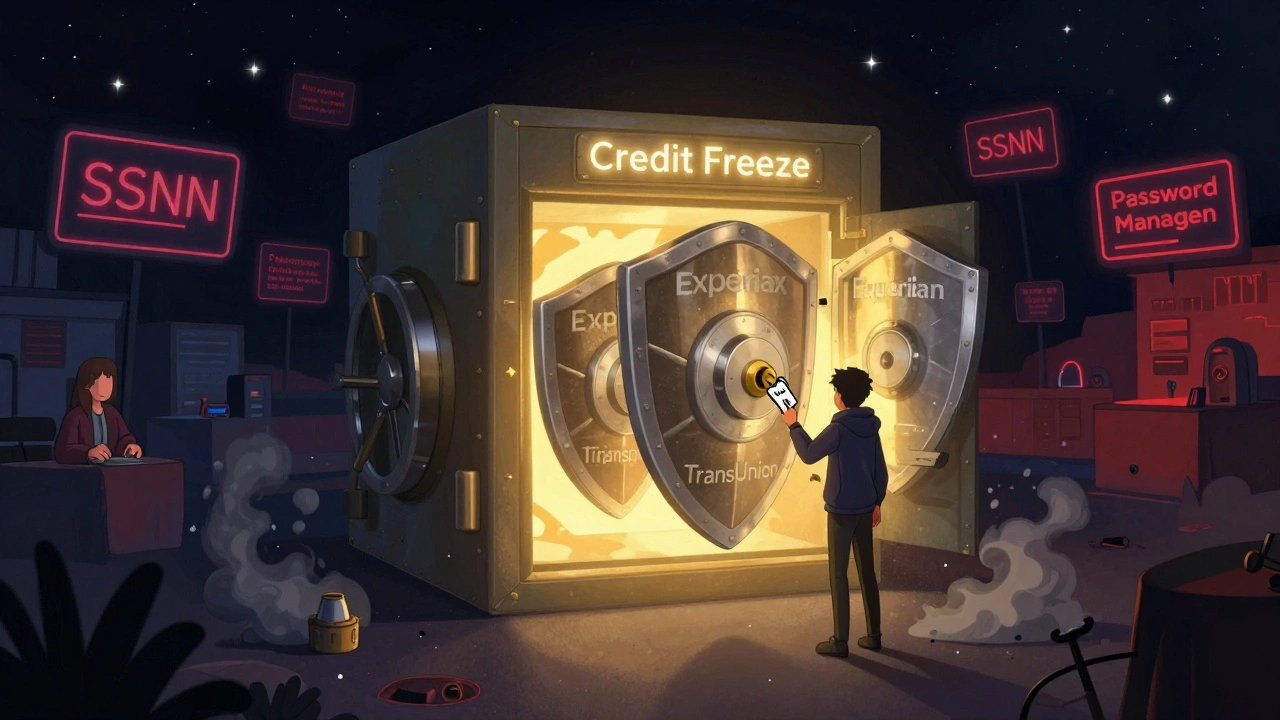
What’s Next? The Future of Financial Identity
Chase Bank rolled out behavioral biometrics to 12 million users in late 2024. It tracks how you type, how you move your mouse, even how you hold your phone. If someone else logs in, even with your password, the system flags it. False positives dropped 53%. Microsoft’s ION blockchain network processed over a million self-sovereign identity verifications in August 2025. That means one day, you might control your own digital ID-no company holding your data, no breaches. But it’s years away. Meanwhile, smart ATMs are still broken. 89% had unpatched security flaws in Q2 2025. Hackers can clone your card data just by installing malware on the machine. The bottom line? Technology helps-but it’s not magic. The most powerful tool you have is awareness.What to Do If You’re Already a Victim
If you suspect your identity is stolen:- Freeze your credit immediately at all three bureaus.
- File a report with the FTC at IdentityTheft.gov. It generates a recovery plan.
- Contact your bank and credit card issuers. Ask them to close compromised accounts and issue new cards.
- Check your credit reports for unfamiliar accounts. Get free reports at AnnualCreditReport.com.
- Change every password, especially for email and banking.
- Keep a log of every call, email, and form you fill out. Recovery takes time-but you’re not alone.
Victims who act fast recover in under 40 hours on average. Those who wait? It takes 200+ hours and thousands of dollars.
Can I freeze my credit for free?
Yes. By federal law since 2018, you can freeze your credit at Experian, Equifax, and TransUnion for free. You can do it online or by phone, and it takes less than 15 minutes per bureau. A credit freeze blocks new account fraud completely and doesn’t affect your credit score or ability to use existing cards.
Is SMS-based two-factor authentication safe?
No. SMS codes can be intercepted through SIM-swapping attacks, where criminals convince your phone carrier to transfer your number to a new device. This gives them access to your verification codes. Always use an authenticator app like Google Authenticator or Microsoft Authenticator instead. They’re offline, encrypted, and far more secure.
Do I need a paid identity theft protection service?
Not if you’re doing the basics: credit freezes, strong passwords, and MFA with authenticator apps. But if you’ve been targeted before, have significant assets, or don’t want to handle fraud recovery yourself, a paid service like LifeLock or IdentityForce is worth it. They offer insurance, 24/7 support, and dark web monitoring that free tools simply don’t provide.
Can biometrics like fingerprints prevent identity theft?
Not reliably. Research from 2024 shows fingerprint spoofing can succeed with just $200 in equipment. Criminals can lift your print from a glass or phone screen and recreate it. Biometrics are convenient, but they’re not foolproof. Always combine them with another layer of security, like a PIN or password.
What’s the biggest mistake people make with identity protection?
Reusing passwords across accounts. It’s the #1 reason identity theft happens. If your Netflix password gets leaked, and you use it for your bank, the thief now has access to your money. Use a password manager and generate unique passwords for every financial account.
How do I know if my data is on the dark web?
Free services can’t tell you. Only paid identity theft protection services like IdentityForce or LifeLock scan dark web marketplaces continuously and alert you if your Social Security number, bank details, or email appear. You can also check free databases like Have I Been Pwned, but they only show past breaches-not current sales on criminal forums.
Does a credit freeze affect my credit score?
No. A credit freeze doesn’t change your credit score. It only prevents new creditors from accessing your report to open accounts. You can still use your existing cards, pay bills, and check your credit. You can also temporarily lift the freeze when applying for a loan or mortgage.
Are identity theft protection services worth it for young people?
Yes. Gen Z is now the fastest-growing group of identity theft victims. Synthetic identity fraud-where criminals combine real and fake data to create new identities-is targeting young people because they have clean credit files. Even if you don’t have a credit card yet, your Social Security number is valuable. Start protecting it now.
Royce Demolition
December 14, 2025 AT 00:56YESSSS! 🔥 This is the exact info I needed before my next bank trip. Credit freeze? Done. Authenticator app? Installed. Shredder? Bought. I’m not waiting for some AI voice clone to call me ‘Dad’ and beg for rent money. 💪 #StaySafe
Robert Shurte
December 14, 2025 AT 14:13It’s fascinating-how the most effective defenses are also the most mundane. We’ve outsourced vigilance to corporations, apps, and algorithms… yet the real armor? A $30 shredder, a password manager, and the discipline to hang up. The irony? The system doesn’t want you to be this careful. It profits from your complacency.
And yet-we still have agency. Not through blockchain or biometrics, but through ritual. Repetition. The quiet refusal to be lazy. That’s the real revolution.
Sabrina de Freitas Rosa
December 16, 2025 AT 01:48OMG I can’t believe you people are still using SMS codes?? 😒 You’re basically handing your life to a hacker like it’s a free cup of coffee. And if you think ‘Password123!’ is safe, you’re one phishing text away from living in your car. Get your act together. I’ve seen too many friends lose everything. Stop being naive.
Erika French Jade Ross
December 16, 2025 AT 09:05i just froze my credit last week… honestly felt like a wizard 🧙♀️✨
also started shredding my mail and now my trash looks like a confetti factory. weirdly satisfying.
my mom still uses the same password for everything and i’m too scared to tell her. she thinks ‘ilovecats123’ is unbreakable. 🙃
Mark Vale
December 17, 2025 AT 05:40Let me tell you something… the government knows. They’ve known for years. That’s why they made credit freezes free-so you’d think you’re safe, while they quietly sell your data to private contractors under ‘national security’ loopholes.
Dark web scanners? They’re just a front. The real data leaks come from INSIDE the bureaus. Equifax? They had the breach in 2017… and still use the same servers. Coincidence? I think not.
And don’t get me started on AI voice clones… they’re not just for scams anymore. They’re being used to manipulate elections. You think your daughter called? What if it was a bot trained on her voice from TikTok videos?
They’re watching. They’re listening. And they’re selling your identity to the highest bidder. You think you’re protected? You’re just a data point in a spreadsheet.
Freeze your credit? Good. But don’t sleep. Don’t trust. Don’t assume. Because the real theft? It’s not in your bank account. It’s in your freedom.