Open Banking Data Minimization Calculator
Understand What Data Your Open Banking Services Need
This tool shows you exactly which financial data should be collected for common open banking services under CFPB Rule 1033. See what's necessary versus what should be avoided.
Data Requirements Analysis
Select a service type to see analysis
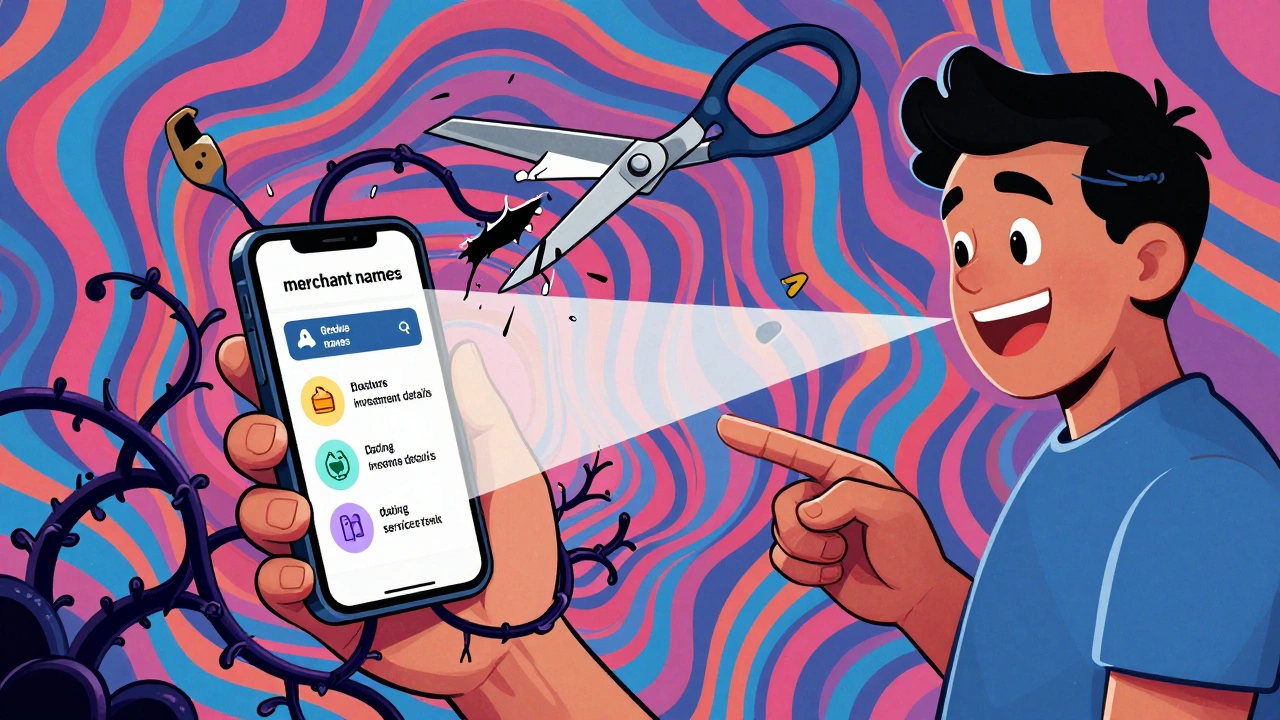
When you sign up for a budgeting app that connects to your bank account, what data does it really need? Do you really want it seeing every single purchase you made at a pharmacy, a liquor store, or a dating service? Most people don’t. That’s where data minimization comes in - the idea that you should only collect the financial data you absolutely need to deliver a service. No more, no less.
Why Data Minimization Matters in Open Banking
Open banking lets third-party apps access your financial data with your permission. It’s how apps like Mint, YNAB, or even your landlord’s rent verification tool can pull your account balance or transaction history. But with great access comes great risk. The more data an app collects, the bigger the target it becomes for hackers, and the more likely it is to be misused - even accidentally. The 2024 CFPB Rule 1033 changed the game in the U.S. It legally requires that financial institutions and third-party providers collect only the data necessary for the specific service you’ve asked for. No fishing expeditions. No storing your entire transaction history just because they can. If you’re using an app to track your monthly spending, it doesn’t need your investment portfolio details, loan applications, or credit card rewards history. It needs your account balance and transaction categories - nothing more. This isn’t just about privacy. It’s about trust. A 2024 Matomo security analysis found that limiting data collection reduces breach risk by up to 68% compared to apps that harvest everything. When consumers know their data isn’t being stockpiled, they’re more likely to use open banking tools. And when they trust the system, adoption grows - which means more innovation, not less.How Data Minimization Works Technically
It’s not enough to say “collect less.” You have to build it into the system. That’s where APIs come in. Open banking relies on standardized Application Programming Interfaces that act like controlled doors between your bank and third-party apps. These APIs don’t hand over your entire financial life. They hand over exactly what’s requested. For example:- A rent verification service only needs a yes/no answer: “Does this account have enough funds to cover rent this month?” It doesn’t need to see your last 12 months of grocery receipts.
- A budgeting app needs aggregated spending categories - “$450 on dining,” “$120 on transit” - not the name of every restaurant or bus stop.
- A loan application tool might need your income history and account balances, but not your peer-to-peer payment history with friends.
- Field-level filtering: APIs only return specific data fields, not entire datasets.
- OAuth 2.0 authorization: You approve each data access request individually - and you can revoke it anytime.
- Consent logging: Every time data is shared, the system records what was shared, with whom, and why - so you can audit it later.
What Data Is Allowed - and What Isn’t
Not all financial data is created equal. Here’s what’s typically considered “minimum necessary” under current standards:- Allowed: Account numbers (masked), current balance, transaction dates, categories (e.g., “groceries,” “utilities”), income deposits, recurring payments.
- Not allowed: Full merchant names (e.g., “Walmart Supercenter #1234”), transaction notes, investment holdings, loan terms, credit scores (unless explicitly requested for a loan application), social security numbers, passwords.

Where the System Still Falls Short
The rules are clear. But enforcement? Not so much. The Bank Policy Institute points out that while Rule 1033 sets strong standards, it lacks consistent oversight. There’s no central watchdog constantly auditing third-party apps to make sure they’re not sneaking in extra data requests. Some fintechs still use clever workarounds - like asking for “full transaction history” under the guise of “personal finance insights,” even if they only need totals. Also, not all banks implement the rules the same way. A small regional bank might have a basic API that doesn’t support field-level filtering. A big national bank might have a sophisticated system that blocks over-collection perfectly. That inconsistency confuses users and creates security gaps. And then there’s the consent problem. Most people click “Allow” without reading what they’re agreeing to. The CFPB requires clear language - “This app will access your checking account balance and last 90 days of transactions for budgeting purposes” - but not all apps follow it. Some still bury the details in legalese.How Businesses Can Get It Right
If you’re a fintech startup, merchant, or service provider using open banking, here’s how to stay compliant and build trust:- Map your use case first. What exact problem are you solving? Write it down. Then list the data points you need to solve it. Cross out anything that isn’t essential.
- Design your API calls to match. Don’t ask for “all data.” Ask for “account balance,” “monthly income deposits,” or “last 30 days of categorized transactions.” Be specific.
- Don’t store data longer than needed. If you’re verifying a one-time payment, delete the data after 24 hours. If you’re building a monthly budget, delete it after 12 months unless the user opts in to keep it.
- Use consent layers. Let users choose what to share. “Do you want us to see your spending categories? Yes/No.” “Do you want us to see your account balance? Yes/No.” Give control, not just access.
- Test your system. Run penetration tests. Ask a developer to try to extract more data than allowed. If they can, your API isn’t locked down properly.

The Bigger Picture: Trust as a Competitive Advantage
Open banking isn’t going away. It’s growing - into lending, insurance, payroll, and even tax filing. The more it expands, the more sensitive the data becomes. A company that handles your mortgage application now has access to your income, debt, and spending patterns. That’s powerful. But it’s also dangerous if mishandled. Organizations that embrace data minimization aren’t just complying with the law - they’re building a reputation. Consumers are starting to notice. Apps that say, “We only collect what we need,” get higher adoption rates. They get better reviews. They get chosen over competitors who feel “creepy” or “overreaching.” The OECD found that small businesses using open banking for accounting saved 30% on administrative time - but only when data was handled responsibly. When data was misused or over-collected, trust dropped, and usage fell. Data minimization isn’t a limitation. It’s a strategy. It forces you to focus on what really matters: delivering value, not collecting data. The most successful open banking services won’t be the ones with the most data. They’ll be the ones with the clearest purpose and the cleanest data practices.What’s Next for Data Minimization?
The next wave of open banking will include:- Granular consent controls: Instead of “Allow all” or “Block all,” you’ll be able to say, “Allow access to my checking account for 30 days, but only for balance and transaction categories.”
- Automatic data expiration: Data will self-delete after a set time unless renewed.
- Interoperable standards: Banks and fintechs will use the same data definitions so apps can’t game the system by redefining what “necessary” means.
- Consumer dashboards: A single place where you can see every app that has access to your data, what it’s using, and when it was last accessed.
What does data minimization mean in open banking?
In open banking, data minimization means collecting only the specific financial data needed to deliver a service you’ve requested - nothing more. For example, a budgeting app only needs your account balance and transaction categories, not your full transaction history, investment details, or loan applications. This reduces privacy risks and builds consumer trust.
Is data minimization required by law in the U.S.?
Yes. As of October 24, 2024, the CFPB’s Rule 1033 legally requires U.S. financial institutions and third-party providers to collect only the minimum data necessary to provide the requested service. It also bans data use for advertising, resale, or unrelated purposes.
Can third-party apps still access my full transaction history?
Only if you explicitly consent to it for a valid reason - like a loan application that needs to verify income patterns. But even then, the API should be designed to limit access. Most apps don’t need your full history. A budgeting tool should only get categorized spending totals, not the name of every merchant you’ve ever paid.
How do I know if an app is following data minimization rules?
Look at the consent screen. If it says “This app will access your checking account balance and last 90 days of transactions for budgeting,” that’s good. If it says “This app needs full access to your financial data,” that’s a red flag. Also check if you can revoke access easily - Rule 1033 requires that data be deleted automatically when you do.
What happens if an app collects too much data?
If an app violates data minimization rules under Rule 1033, it can face enforcement actions from the CFPB, including fines, forced data deletion, and bans from accessing financial data. Consumers can also revoke access at any time, and banks are required to stop sharing data immediately.
Does data minimization slow down innovation in fintech?
No - it actually speeds it up. When users trust that their data won’t be misused, they’re more willing to use new services. Apps that follow data minimization see higher adoption, better reviews, and stronger partnerships with banks. Innovation thrives when it’s built on trust, not data hoarding.
Robert Shurte
December 14, 2025 AT 21:40It’s funny-how we’ve normalized surrendering our financial intimacy for convenience. We hand over the keys to our bank accounts like we’re giving someone a spare house key… and then act surprised when they wander into the bedroom. Data minimization isn’t just a regulation; it’s a philosophical reset. If you don’t need to know *why* I bought that bottle of wine or visited that clinic, then you shouldn’t be allowed to see it. The architecture of trust isn’t built on access-it’s built on restraint. And yet, most apps still beg for everything, then pretend they’re helping. The real innovation isn’t in the API-it’s in the courage to say ‘no’ to data you don’t need.
Mark Vale
December 15, 2025 AT 12:35you know what i think? this whole 'data minimization' thing is just the banks and big gov't trying to make us feel safe while they still track everything through backdoors. they say 'we only collect what we need'... but who's checking? and how do you know they're not storing it in some hidden cloud server under 'analytics'? i've seen the way these apps work-once you give access, they find a way to get the rest. they just hide it behind 'categorized spending' or 'aggregate insights'. it's all smoke and mirrors. trust? nah. i just turn off banking access and use cash. simpler. safer. less creepy.
Royce Demolition
December 17, 2025 AT 02:12THIS. 🙌 Finally someone gets it! Less data = less stress = more freedom. 💪 No more awkward ‘why did you buy that?’ moments from apps trying to ‘help’ 😅 Just give me the numbers I need to budget, delete the rest, and let me live. Apps that respect privacy? I’m subscribing. Apps that snoop? Blocked. 🚫📱 Data minimization isn’t a feature-it’s the new baseline. If you’re not doing it, you’re already behind. Let’s make trust the new cool. 💯