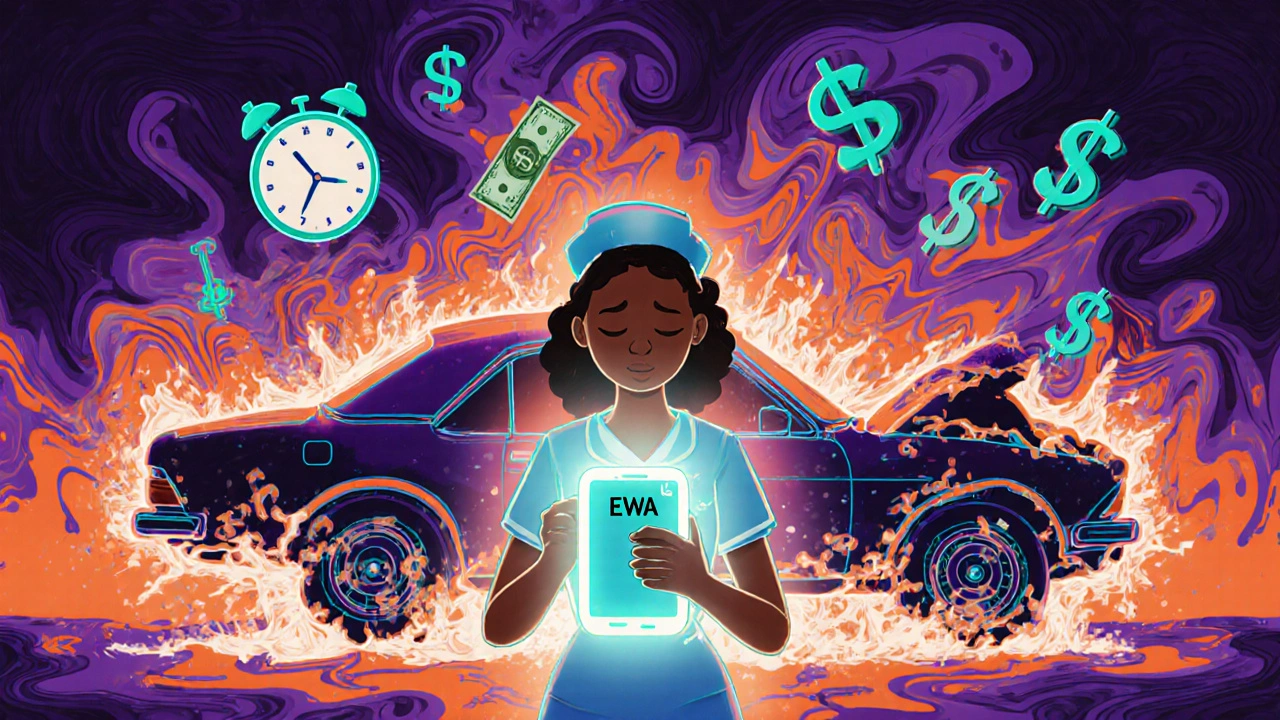
Provider-Funded EWA: What It Is and How It Helps Workers
When you hear provider-funded EWA, a system where employers or third-party financial providers pay employees their earned wages before the official payday. Also known as earned wage access, it’s not a loan—it’s your own money, given to you sooner. Unlike payday loans that trap people in debt, provider-funded EWA gives workers control over their cash flow without interest or hidden fees. It’s becoming a standard benefit alongside health insurance, especially for hourly workers, gig employees, and anyone living paycheck to paycheck.
This model works because the EWA platform, a technology provider that connects employers to employees for real-time wage access tracks hours worked and calculates earnings daily. When you request access to $200 you’ve already earned, the provider covers it upfront and gets repaid automatically when payroll runs. The employer doesn’t pay extra—just integrates the service into their existing payroll system. This is different from employer-funded EWA, where the company pays the cost. Here, the financial provider, a third-party company that funds the early payouts and manages risk and compliance takes on the cash flow risk in exchange for a small fee from the employee or the employer.
Why does this matter? Because 60% of Americans can’t cover a $400 emergency without borrowing. Provider-funded EWA helps people avoid overdraft fees, skip high-interest loans, and reduce stress. It’s not magic—it’s just better timing. You work Monday through Wednesday, need gas money Thursday, and get $180 of your earned pay without waiting until Friday. No credit check. No application. No debt.
Companies like Paychex, ADP, and even Walmart and Target now offer this through partners like Even, PayActiv, or DailyPay. These platforms integrate with your time clock, sync with payroll, and often include budgeting tools or financial education. The result? Workers feel more secure. Employers see less turnover. And the system stays balanced because payouts are always tied to actual hours worked, not future income.
It’s not perfect. Some providers charge small fees for instant transfers, and not all states have clear rules yet. But compared to the alternatives—payday lenders, credit card cash advances, or skipped bills—it’s a clear win. And as more employers adopt it, the competition drives fees down and features up.
In the posts below, you’ll find real comparisons of EWA platforms, breakdowns of how they connect to payroll systems, and tips on choosing one that actually helps—not just profits. Whether you’re an employee looking for better cash flow or an employer exploring benefits, these guides cut through the noise and show you what works today.