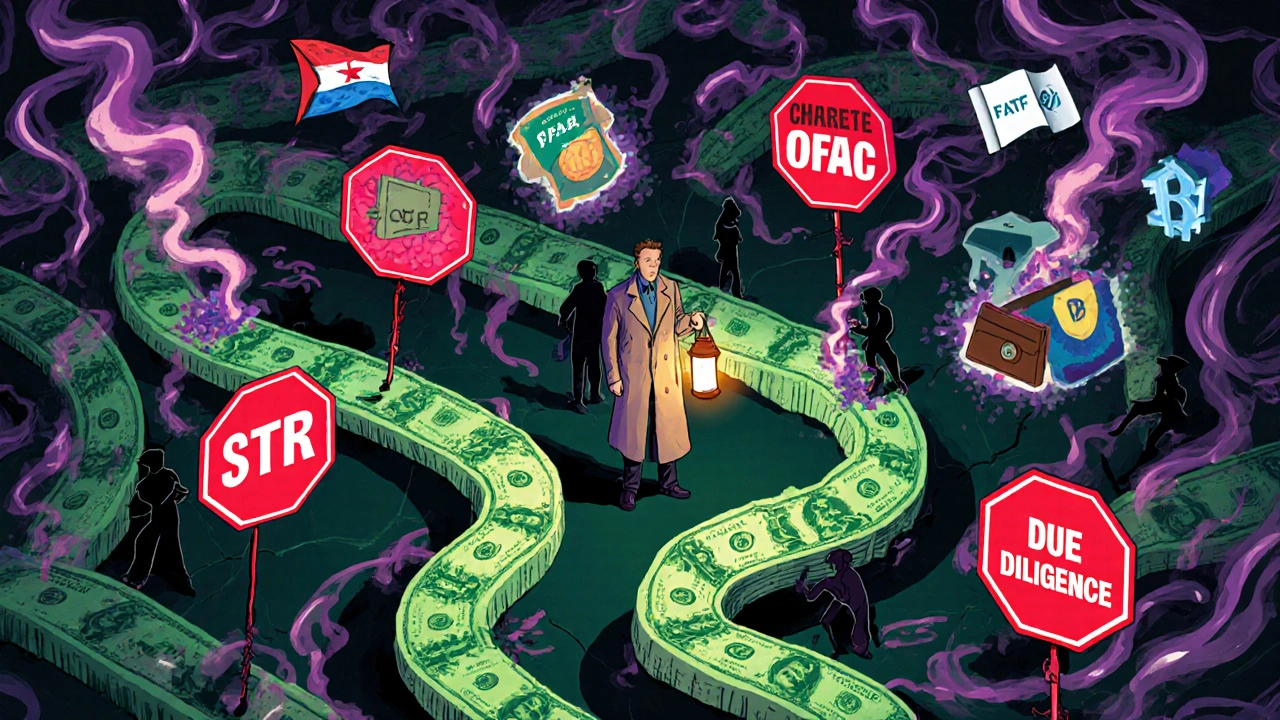
FinCEN: What It Is and How It Affects Your Money
When you hear FinCEN, the Financial Crimes Enforcement Network, a bureau of the U.S. Department of the Treasury. Also known as Financial Crimes Enforcement Network, it's the agency that watches where money moves—especially when it looks suspicious. You might think it’s just for big banks or drug cartels. But FinCEN touches your money too—whether you’re running a small business, sending money overseas, or even depositing cash over $10,000 at your bank.
FinCEN doesn’t investigate crimes directly. Instead, it collects reports from financial institutions: banks, credit unions, crypto exchanges, even money transmitters. If you send $15,000 to a relative in Mexico, your bank files a Currency Transaction Report, a mandatory form filed when cash deposits or withdrawals hit $10,000 or more. If your business gets a $20,000 check from a client with no clear reason, your bank might file a Suspicious Activity Report, a confidential alert sent when unusual or potentially illegal financial behavior is detected. These aren’t accusations—they’re data points. And FinCEN uses them to spot patterns: money laundering, tax evasion, terrorist financing, or even fraud targeting seniors.
That’s why compliance matters. If you’re a small business owner using a payment processor like Stripe or PayPal, they’re required to report your transactions to FinCEN. If you’re investing in crypto, exchanges like Coinbase must verify your identity and report large transfers. Even if you think you’re doing nothing wrong, FinCEN’s rules apply. Ignoring them doesn’t make you invisible—it just increases the chance your account gets flagged, frozen, or audited.
FinCEN’s rules aren’t going away. In fact, they’re expanding. New regulations now cover virtual asset service providers, private equity funds, and even certain trust companies. The 2021 Corporate Transparency Act forced thousands of small businesses to disclose their real owners to FinCEN—something that caught many off guard. And with AI now analyzing millions of reports, the system is getting smarter at spotting anomalies.
So what does this mean for you? If you’re managing money—whether it’s your savings, your startup, or your side hustle—you need to understand the basics. Know when reporting kicks in. Know why your bank asks for extra paperwork. Know that transparency isn’t just legal—it’s the easiest way to avoid trouble. The posts below break down exactly how FinCEN impacts everyday financial decisions: from how businesses handle cash to how investors navigate crypto compliance. You’ll find real examples, clear explanations, and practical steps to stay on the right side of the rules—without the jargon or fear.